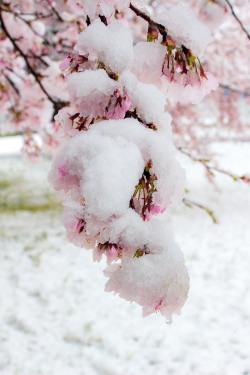
(Spring Snow, 255)
It is comforting to think that culture has a longer lifespan than man. But sometimes it is the other way around. A culture that dies suddenly still remains in the minds of its last carriers for as long as they live, sometimes decades. By inertia, it still seems to exist. But they do not pass it on, and once they die, it vanishes abruptly — from the material world, of course.
Japanese culture died in 1945 with the dismantling of Imperial Japan. But its life after death lasted another 25 years, and, ironically, this period was far more vibrant than the one before it. For example, Japanese cinema came into being as an international phenomenon: Akira Kurosawa and Yasujiro Ozu were celebrated around the world for films that were set in Japan and were unambiguously Japanese in outlook and aesthetic. It hardly matters if they sometimes showed Western influence. So did Natsume Soseki back in the 1900s.
Japanese literature, likewise, underwent a striking, sudden efflorescence. Kawabata and Tanizaki both got their start before the war, but wrote their best work after it. A number of secondary writers appeared and produced minor masterpieces, like Kobo Abe’s Woman in the Dunes. When Kawabata received the Nobel Prize in 1968, he was not only representing himself as an individual writer, but also a literary history and thought whose significance, clearly, extended far beyond Japan. The meteoric life and work of Yukio Mishima was the final act of this cultural drama.
But where is all this now? Fifty years have passed, unmarked by a single cultural figure comparable to any of these people. Even Haruki Murakami, whose writing looks helpless and parodic next to theirs, has long passed the peak of his popularity. Japanese popular culture, which was quite competitive with the American product (which, in large part, it helped create) in the 1980s and 1990s, is now enervated and derivative of itself. In its place, the world is fascinated by Korean boy bands, the cultural figures that it deserves, though even these are better than the Western alternative. Mishima wrote, “Soon Japan will vanish altogether. In its place, all that will remain is an inorganic, empty, neutral, drab, wealthy, scheming economic giant in a corner of the Far East.” (Rankin, 163) To that, I would only add that it will not be particularly wealthy either. In the West, this process of denaturation involved a temporary (and ultimately brief) phase of hedonism, but Japan passed directly through it to the next stage: moral exhaustion and disgust with all human life. A recent (February 2023) article in the expatriate magazine Tokyo Weekender is titled, “Exploring the rise of asexuality in Japanese fiction,” and describes a recent novel containing “plenty of things that strike you… The incest. The child abuse. The pedophilia. The cannibalism. The teenager hacking a man to death with a garden tool during a psychotic episode.” Any psychiatrist would have stopped there, but the article obliviously continues, telling us that this writer “questions the definition of normality through a central character who views sexuality as an entirely foreign concept.” All well and good, but to paraphrase Nietzsche, when you question normality, normality also begins to question you. And the answer will be the silence of a cold and lifeless universe.
So what happened? I think the answer is simple: the creators of postwar Japanese art were born and raised in Imperial Japan. At the end of World War II, Kurosawa was 35, Ozu was 41, Kawabata was 46, Tanizaki was 59, and even Mishima was 20, the age at which his most famous characters died. All of them were fully formed in, and by, pre-war Japanese culture. The creation of this culture was a purposeful act of the Japanese state. To compete with the other great powers, Imperial Japan desperately needed an educated and culturally uplifted population — one cannot willingly die for the state if one is not first given an ideal for living. There was only a short time in which to complete this program, requiring a great concentration of will. All of the Western nations did the same. We are the shattered fragments of these monumental structures; our limited, weak individual selves are the dregs of the great nation-building projects of the 19th and early 20th centuries.
The irony is that none of these artists would ever have had the same level of artistic freedom if Imperial Japan had survived. Even Soseki had already begun to feel constrained by the modern militaristic empire, but his was still a relatively benign time; perhaps it is for the best that he did not live to see the 1930s. I have no reason to sympathize with Imperial Japan as a political entity, and I understand that it viewed the creation of Japanese culture as just one item in its avaricious, aggressive program. Nonetheless, whatever the motives behind this act of creation, the result was a living, breathing organism, and after 1945 it dreamed its last dying dream — the kind in which fantastically detailed worlds appear, and decades pass, within a single instant. Most of those involved did not flamboyantly proclaim, as Mishima did, that “I am the last remnant of the cultural traditions and national characteristics of the Japanese people…when I am gone it will all be over,” (Rankin, 164) and perhaps such a notion had never even occurred to them. But if you consider their work as a whole, in panoramic view, it may begin to seem as if they were all in a desperate hurry to express everything that was on their minds — a huge swell of thoughts, dreams, emotions — because they sensed that it would all vanish once they left.
 Yasujiro Ozu’s gravestone, marked only
with the character for “nothingness.”
Roger Ebert saw, in Ozu’s Tokyo Story, “characters so universal that we recognize them instantly — sometimes in the mirror…it is about our families, our natures, our flaws and our clumsy search for love and meaning.” Not exactly. Chishu Ryu, the actor who played most of Ozu’s genteel old fathers, was born in 1904. In Tokyo Story specifically, the old couple’s middle son was killed in the war, and it is his widow, alone among the other characters, who shows them any compassion or understanding. Loss has set her, and them, apart from and above the world of working routine in which everyone else is mired. Tokyo Story is universal, in a sense, but “our natures” are only of secondary importance to it — rather, the film shows us other natures, carriers of one of the great world cultures, who by pure chance outlived their empire. These characters are ordinary people, but their culture was aristocratic, and left a mark of subtle fascination on them. This elusive sorrow gives meaning to what would otherwise be a story about completely unremarkable, unthinking, everyday callousness. Viewers respond to this feeling and make it part of themselves.
One might be tempted to read some sort of social criticism into Tokyo Story — Ebert thought that “Ozu’s lifelong theme is the destruction of the Japanese family through work and modernization.” But Late Spring, made in 1949 by the same director, has a feeling of relief and renewal, and is overall surprisingly sunny considering its ambiguous ending and the time when it was made. And Ozu’s final film, An Autumn Afternoon, ends with a scene where Ryu’s character goes out drinking with a former wartime comrade, who parodically salutes and marches around the room, and finally states, “It’s better that Japan lost the war.” Perhaps it is meant in earnest, perhaps not. But Ozu’s own opinion on that subject, if he really had one, is irrelevant. The task that he accomplished was simply to record these people — to preserve their faces, their manners, their customs, their varying feelings about their lot in life, the world that seems to exist inside them, unconnected to their present circumstances. This work of art is self-contained, living forever out of time. Its heart is just as foreign to contemporary Japanese as it is to Westerners.

To understand the magnitude of this accomplishment, we may observe that, in the 2020s, American culture is also dead, the cause being dementia rather than war, but its own surviving carriers have nothing left to say. Only a senescent Bruce Springsteen still remains to write songs about cafe owners who “came home in ’45 and took out a GI loan,” which would put them in their late nineties now, far outside the age range in which one can realistically operate an establishment for “the truckers and the bikers.” There is not even a token effort at verisimilitude, and thus, no possibility of a dignified death — only the hallucination of a narcotized haze as one is wheeled down the hospital hallway. Ozu and the others gave Japan immortality, in another world.
Spring Snow, the pinnacle of Mishima’s writing, has even greater ambitions. Instead of simply preserving the last testament of Japanese culture, Mishima here seeks to resurrect its youth, to bring it back into existence purely through descriptive power. The novel begins in 1912, more than a decade before the author himself was born, before Soseki wrote Kokoro, before Hirohito became Emperor, before the rise of industrial capitalism, in a strange artificial twilight era where wealth and power were arbitrarily bestowed upon a makeshift aristocratic class, improvised on the spot, with Western titles like “Baron” and “Marquis.” In fact, Spring Snow was and is perhaps the only significant literary evocation of this world — its contemporaries, like Soseki and Tanizaki, mainly focused on the middle class and petty nobility, which were much closer to their own environment. The world of Sanshiro, The Makioka Sisters, and Snow Country has some variation across authors and decades, but overall feels consistent and recognizable. The world of Kiyoaki Matsugae is nothing like that one, and remains fundamentally unreal; it is very fitting that Kiyoaki’s dreams are a prominent literary device in the novel and its sequels. And, for that very reason, it has the most reality of any setting in all of Mishima’s work.
Nowhere has literature demonstrated its power of illusion more fully and confidently than in Spring Snow. An overabundance of ornamental detail surges immediately from the first pages, when Mishima describes the Matsugae estate:
(Spring Snow, 5-6)
There is much more. The billiard room receives a similarly ornate description — “With its English-style oak paneling, its portrait of Kiyoaki’s grandfather, and its large map done in oils depicting the naval battles of the Russo-Japanese war, this room was much admired by visitors. One of the disciples of Sir John Millais, famous for his portrait of Gladstone, had done the huge likeness of Kiyoaki’s grandfather during his stay in Japan” (38) — as do the library and the stable. Family rituals are laid out with pedantic attention to every minor nuance: “From spring to early summer, the three principal events in the Matsugae household were the Doll Festival in March, the cherry blossom viewing in April, and the Shinto festival in May. But since the prescribed year of mourning following the death of His Imperial Highness had not yet elapsed, it was decided that this year the March and April festivals would be curtailed…much to the disappointment of the women in the house. For throughout the winter, as happened every year, all sorts of rumors had been filtering down from the quarters of the senior staff about plans for the Doll Festival and the blossom viewing — such as the story that a troupe of professional entertainers would be brought in.” (112) The Marquis’ meticulous preparations for the cherry blossom festival are chronicled with equally scrupulous attention:
(Spring Snow, 118-119)
This level of detail is not uncommon in historical novels — in fact, The Sea of Fertility sometimes feels similar to War and Peace. But it is very uncommon for Mishima, who never cared about the plausibility of his settings before or after Spring Snow. There are fancy dinners in The Temple of Dawn and The Decay of the Angel, but they are described in a cursory manner, with no interest in what is being served or how the rooms are arranged. In Spring Snow, on the other hand, the entire menu is presented verbatim:
(Spring Snow, 138-139)
The omission of, and blatant disinterest in, these particulars in every other novel by Mishima underscores the deliberateness of including them here. However odd this sounds, it was vitally important to him that you see and remember this, that it should be shown to you in exactly this way.
Memory is fundamentally creative. You do not remember events from your own life exactly as they occurred. As they are filtered through your mind, some details are lost and others are invented, and often these latter feel the most real. The grass was ten foot high; your parents were king and queen, beauty and wisdom personified; your first love was full of sweetness and poetry. No one and nothing can take that away from you, certainly not mere physical reality. This creative force is even more powerful in the life of culture than in individual life. Memory transforms the world and replaces history. Huizinga showed that the historian is an active participant in history hundreds of years after it transpires; the freedom of the writer, then, is limitless. “Kiyoaki suddenly felt liberated… Six years later, he now felt that he had recaptured a fragment of time, sparkling and crystalline, from a different perspective,” (122) an experience he has in common with the author, and with the reader.
Thus we have reached the interpretation of Spring Snow as a nostalgic recreation of a “golden age” to be contrasted with the barren, degraded present day. Perhaps Mishima himself would not dispute such a view. It is very much in line with his views and personality, expressed consistently throughout his entire life:
(Rankin, 7-8)

This passage comes from Mishima, Aesthetic Terrorist by Andrew Rankin, published fairly recently (2018). Though many books about Mishima have been written, this is arguably the first serious English-language effort (in fifty years) to construct an “intellectual portrait” of the author that moves beyond the lurid details of his death. Rankin perused the entirety of Mishima’s written work, including his essays and letters, in the original Japanese. This material, largely unknown and inaccessible to Western readers, seems at first glance to reveal new perspectives on its subject. In the end, however, Rankin’s thesis is not far removed from the long-standing opinion, going back to John Nathan’s 1974 biography, that Mishima’s suicide was the culmination of a kind of lifelong art project, an ultimate performance combining his erotic and aesthetic inclinations. So then, if we follow this reasoning, the world of Spring Snow has to be beautiful so that Kiyoaki can die in it, thereby enabling Mishima to become the poet of his beautiful death; in Rankin’s words, “there is also a sense in which Mishima wants Japan to be in decline so that he can be its last defiant hero, a kamikaze of Japanese beauty… Mishima’s work is suffused with a sense of ending…and it conforms to a decadent aestheticism that holds that beautiful things radiate their most intense beauty on the cusp of their destruction.” (11)
Well, no one would deny that Mishima’s pronouncements were driven by narcissism as much as by conviction. Rankin’s explanation is consistent, convincing, and satisfying…and therefore, I am afraid, rather glib. Mishima is a treacherous writer, who thinks nothing of assigning strong opinions and strident monologues to one character and then contradicting them in a later scene or a different novel. For example, when Rankin confidently asserts, “Hiraoka was tormented by the elusiveness of his own existence. He experienced this elusiveness in a literal way, having only a flimsy cognizance of his own physical reality,” (8) he is simply paraphrasing Mishima’s description of a character in Kyoko’s House: “As if responding to a command, Osamu touched his own arms through his sleeves and ascertained that they were there. Warm, strong arms…his fingers perceived the pleasant firmness of living flesh. Therefore, Osamu undoubtedly exists.” (Kyoko’s House, 231) Perhaps Osamu is just giving voice to Mishima’s own feelings (but why only Osamu?), but Rankin repeatedly warns us not to take Mishima’s self-dramatization at face value. On the other hand, if Kyoko’s House is to be a source of accurate self-characterization, it also contains an interesting rejoinder to Rankin’s characterization of Mishima’s “decadent aestheticism.” The painter Natsuo thinks (emphasis mine), “Even if we imagine that the human body is a work of art, we will not be able to withstand the fact that time will undermine and weaken it. Therefore, we may suppose that only suicide during the prime of one’s life can save the body from destruction.” (236) Cause and effect have been reversed. Rather than destruction being the means through which beauty is achieved, per Rankin, the claim here is that destruction preserves beauty that already exists by giving it a kind of immortality. There is no reason why this has to be Mishima’s “true” credo either; I am simply observing that it has a different meaning than what Rankin proposes. So, Mishima’s writing can easily be made to support any interpretation (the more perverse, the better), but will just as easily corrode that interpretation from the inside.
 2023 Russian edition of Kyoko’s House.
And, indeed, the warm nostalgia in Spring Snow conceals a cold, sharp edge. According to Rankin, Mishima was critical of “a naïve tendency to think of culture in terms of things: the things that hang on the walls of art galleries, the things that are displayed inside glass cases in museums.” (Rankin, 127) But in Spring Snow, it is precisely the “things” that Mishima loves. The excess of descriptive detail is concentrated around the opulent Matsugae residence: the artificial pond, the women’s kimonos, the painting of Kiyoaki’s grandfather hanging on the wall, the books in the library. Just as in Nabokov’s Other Shores, beautiful things are the constituent elements of beauty. But, in Nabokov, the presence of beautiful things was equivalent to the moral beauty of their owners, and in Mishima it most certainly is not.
The realization comes slowly. Mishima’s genial exposition of the banquet menu carries a note of irony, that so much time is being spent on something so frivolous. Then the guests arrive, and two elite aristocrats, the refined and courtly Count Ayakura and the wealthy Anglophile Baron Shinkawa, partake of the following sophisticated dialogue:
(Spring Snow, 130)
The idiocy of this exchange could be said to strike a note of English humor, except that no English writer ever dared to make fun of an aristocrat. That alone shows that Mishima was quite unburdened by respect for the national elite. But overall, the tone here is one of good-natured comedy.
Less amusing is the fact that Marquis Matsugae’s “mistress was installed in one of the houses just outside the gate,” and that, “When Kiyoaki was a child, his father would take him by the hand and walk with him as far as the gate en route to his mistress’s. There they would separate, and a servant would bring Kiyoaki back.” (40) The Marquis also sleeps with the more attractive maids, and the chain of consequences leads inescapably to violence and death: after the maid Miné is married off, her husband severely beats her and forces her to abort her pregnancy, “because no amount of calculation of the time involved had been able to satisfy him that the child was his own and not Marquis Matsugae’s.” (Runaway Horses, 133) The Marquis’ crudeness is well-known among aristocratic circles, but the elegant Count Ayakura is capable of even greater perversion:
(Spring Snow, 305-306)
Had events proceeded exactly according to this plan, it would be a horrifically depraved way to think about one’s daughter and only child, and certainly a low and mean mindset unworthy of an aristocrat. Considering what does happen, it is even worse.
But all this pales in comparison with the Matsugaes’ and Ayakuras’ flailing attempts to control the unfolding tragedy. Everything is finished: Satoko, separated from Kiyoaki, forced to abort her child, has suddenly and unexpectedly taken the tonsure at Gesshu Temple. But these people continue to invent increasingly bizarre, unrealistic schemes:
(Spring Snow, 331-332)
Perhaps the purpose of Mishima’s hyper-detailed description throughout the book was to subvert it in this passage. The reader understands that this plan is nonsense, and there is much comedy in watching them cling to it. But these four people, gathered in this room and fretting so amusingly, have just killed their own grandchild — they are precisely the four grandparents — and the thought of it never once occurs to them. Perhaps the men have been raised to think only of themselves and their own convenience, but their wives aren’t bothered by it either. Neither woman expresses even an incidental note of regret, even at the “necessity” of it. They just don’t care.

Never, not once in all of world literature, has anyone ever written such a brutal and unanswerable indictment. The national elite of pre-war Japan, in Mishima’s eyes, are impostors — he intentionally groups together, not only the nouveau riche like Matsugae, but the traditional aristocracy personified by Ayakura. These people are not only morally ugly (that might have been forgivable), but totally lacking in substance; they are empty, hollowed-out parodies of nobility, incapable of the most basic animal-like empathy even toward their own children. They know nothing (other than how to compile a dinner menu), they are not fit to run anything, and any country unfortunate enough to be under their rule is doomed. And all this is laid bare, with complete clarity, in scenes set thirty years before World War II.
The voice of traditional Japanese values does appear, in the form of the unhappy servant Iinuma, who prostrates himself before the Matsugae family shrine and beseeches the gods, “Why is our era one of decadence? Why does the world despise vigor and youth and worthy ambitions and single-mindedness? …How long must this age of the effete and the contemptible endure?” (Spring Snow, 72) But these are the values of an underclass, whose loyalty is meant to be unnoticed and unappreciated by the aristocracy. And Iinuma himself is a bumbling, pathetic figure, taking out his anger and sexual frustration on Miné. Anyone who views Mishima as a nationalist icon should remember that, in Runaway Horses, it is Iinuma who represents the organized right-wing movement; we’ll come back to that later, but it is a very deliberate choice by the author. In any case, Iinuma is helpless to offer any serious alternative to the worthlessness of the aristocracy.
Then what is the object of Mishima’s nostalgia? Where is the golden age, the Japanese culture for which he yearns? Close to the end, there is a striking scene where Kiyoaki attends the Emperor’s annual poetry reading, performed by Count Ayakura:
(Spring Snow, 359-360)

I wonder if Mishima had ever read Andersen’s story about the nightingale and the mechanical bird, “resembling a real one, but all covered in diamonds, rubies and sapphires. When the bird was started, it would sing one of the melodies of a real nightingale and waggle its tail, which gleamed with gold and silver.” Beautiful, useless artifice, unaware of its own emptiness and therefore not culpable. Both the Emperor and the Count are not even actors, but elaborate decorations on a wondrous stage, for a great play that will inspire beautiful, noble emotions in the hearts of its audience, coming to life anew for every generation. The fragile, beautiful harmony of the play is completely independent from the decorations, but is the only thing that can justify their existence. Mishima despises these people, as they deserve, but mourns the sublime composition in which they functioned. And he knows very well that they brought about its ruin, but when he envisions them in their assigned places, he cannot help loving them too, if only for a moment.
Perhaps it is time to turn to the central characters. Kiyoaki Matsugae, of course, is the Marquis’ spoiled, idle, beautiful son, who falls in love with Satoko Ayakura only after she has been betrothed to a prince from the Imperial household. If you are here and have read this far, I don’t suppose it will surprise you that the novel ends with his death. In a way, however, he is the central figure of the entire Sea of Fertility, as the protagonists of the other three novels are connected to him, and many later characters and developments are linked to events that happen in Spring Snow, such as the loss of the Thai prince’s emerald ring. To the extent that it is possible to understand The Sea of Fertility, perhaps it can only happen through Kiyoaki.
On the surface, Kiyoaki’s story seems to be about following one’s emotions, blindly rushing in. From the beginning, Mishima states that, “The only thing that seemed valid to him was to live for the emotions — gratuitous and unstable, dying only to quicken again, dwindling and flaring without direction or purpose.” (15) Well, Mishima was nothing if not a man of action, and intellectual types who make long-term plans are generally not viewed positively in his novels. As he wrote in “Sun and Steel,” an essay on action and physical experience, “The men who indulged in nocturnal thought, it seemed to me, had without exception dry, lusterless skins and sagging stomachs.” One of his more sympathetic protagonists, Koji in The Frolic of the Beasts, is a quiet tough guy, who is capable of violence but not predisposed toward it, and who can think and contemplate but not aestheticize, owing to his lack of education. Kiyoaki is quite different — he disdains the uncouth kendo players at his school, and was brought up in the Ayakura household, where “The family would play sugoroku, an ancient form of backgammon, far into the night, as was the custom in the Heian era, and the lucky winners would receive traditional prizes, among them candies molded like gifts from the Empress.” (Spring Snow, 22) But his idleness and affectivity prevent him from developing an intellectual life, unlike his friend Honda, who stays up all night reading legal philosophy. His mental activity takes place in dreams, and Mishima deliberately notes that, “Kiyoaki never took the trouble to add a personal interpretation to these accounts of his dreams. He did his best to recall exactly what had taken place, and he set it down as fully as possible, recording happy dreams or ominous ones just as they were.” (83) Perhaps, in the author’s eyes, it is a point in Kiyoaki’s favor that he does not analyze his dreams — to the extent, of course, that Mishima really had a personal evaluation of any of his characters’ qualities.
But Kiyoaki is also capable of cold calculation (it is just unsuccessful) with a considerable malevolent streak. Suffice it to say that, immediately upon deciding that he loves Satoko after all (which occurs only after her marriage has already been arranged), the best and only plan for seeing her again that he can think of is to blackmail her with a compromising letter that, in reality, he had already destroyed. Satoko happens to see through the ruse and goes along with it willingly, but it is only by pure chance that he avoids becoming truly evil. There is a side of him that is uncomfortably similar to Tōru in The Decay of the Angel, which may lead to some unexpected conclusions once we reach the end of the Sea of Fertility.
As in classical tragedy, the protagonist’s destruction is the direct consequence of his personal flaws. Catastrophe was already unavoidably contained in Kiyoaki’s trivial, comic missteps at the start. Resenting Satoko, “who always had a ready supply of fresh ambiguities and riddles to disconcert him,” (29) but really resenting his own helplessness in comparison with her intelligence and maturity, he decides that a suitable revenge would be to pretend to be an experienced libertine: “But then I’m no match for her when it comes to inventing ways of torturing people. What can I do? What would be best would be to convince her that I have no more respect for female dignity than my father has… It wouldn’t be enough to tell her that she doesn’t interest me in the least. That would still leave her plenty of room to scheme. I have to insult her. I have to humiliate her so completely that she’ll never come back for more.” (42) To this end, he writes a ridiculous letter claiming that his father brought him to a brothel (in his opinion, this will demonstrate his independence!), but quickly regrets it and asks Satoko to burn the letter without reading it. Their relationship improves, and it occurs to Kiyoaki that he is “gradually, genuinely falling in love,” (110) but then he accidentally discovers that Satoko had read the letter after all, which to him indicates that “she was a liar from first to last, that she’d been laughing at him secretly from beginning to end…that she had taken a sadistic pleasure in his discomfiture.” (142) He breaks off contact with her; when his parents tell him that she has received a marriage proposal from an Imperial prince, he petulantly pretends not to care, and thereby seals his own fate. Shortly after, “Something sounded within Kiyoaki like a trumpet call: I love Satoko. And no matter how he viewed this feeling he was unable to fault its validity, even though he had never experienced anything like it before.” (178) What starts as a childish tantrum becomes unintentional but very real betrayal, which leads to reckless transgression, for which the only punishment is death.

Mishima did not care much for “inner” beauty; to him, beauty was always physical. Kiyoaki therefore must be beautiful as well, and Mishima’s description lovingly caresses his physical form: “the moonlight washing over the incomparable smooth white of his back, its brilliance highlighting the graceful lines of his body… The moon shone with dazzling brightness on Kiyoaki’s left side, where the pale flesh pulsed softly in rhythm with his heartbeat.” (43) It is hard not to see in Kiyoaki’s self-absorption an idealized image of how Mishima himself would have liked to be as a young man; he once wrote, “The narcissism at the boundary between boyhood and adolescence will use anything for its own purposes. It will even use the destruction of the world…At the age of twenty I could imagine myself as anything. A genius fated to die young. The last young man of Japan’s aesthetic traditions,” (Rankin, 75) and it is not surprising that Kiyoaki is fated to die precisely at that age. But one can always find reasons to see anything in Mishima; there are beautiful villains and failures in his novels as well, and some of the most stereotypically “Mishimaesque” statements are placed in the mouths of the most risible and least heroic characters. Upon closer examination, even youth is revealed to have only conditional value: “The shouts coming from the direction of the athletics field indicated that rugby practice was still in full swing. Kiyoaki hated the idealistic cries that rose from those young throats…hoarse in voice and reeking of youth like green paulownia leaves, they went about wearing their arrogance much as the ancient courtiers wore their tall caps.” (Spring Snow, 170)
If one happens to first read Spring Snow when one is the same age as Kiyoaki, as some have, it is very likely that one will uncritically accept his fantastical mental image of a scheming Satoko, to whom “I was nothing more than a toy she felt like playing with,” (139) presumably because there cannot possibly be any way that she could spend her time other than deceiving a boy two years her junior. Then, returning to Spring Snow (perhaps at twenty-year intervals, the way Honda does in The Sea of Fertility), one may begin to perceive a deep sorrow in the very way in which Mishima dutifully documents these infantile outbursts, without comment. Kiyoaki is still play-acting at “being a man.” These are all pretend hardships, though he may believe otherwise; there is no way he can even imagine the real suffering that will come. Even when it does come, it falls on Satoko alone — he is so inconsequential that fate does not even deem him worthy of punishment:
the last time they see each other (Spring Snow, 314)
But Kiyoaki ultimately earns his suffering, and it is for that, not his beauty or youth, that Mishima loves him. Refusing to accept that Satoko is lost for good, Kiyoaki still indulges in childish fantasies: “As he lay in bed, he told himself that the next day would surely bring a letter from Satoko. She would set a time and place for them to meet so that they could run away together.” (363) When this does not happen, he is driven to run away from home and attempt to see her at the Gesshu Temple. Already falling ill, he is turned away at the door, and, as fever sets in, remarkable reflections pass through his mind:
(Spring Snow, 368)
(Spring Snow, 370)
(Spring Snow, 373)
 Enshō-ji in Nara, on which Gesshu Temple was based.
It was snowing when Kiyoaki came here.
From one point of view, Kiyoaki hasn’t changed at all — he is still a selfish child, believing that his “effort” in walking a quarter mile will somehow appease the universe. But Mishima treats his “ultimate devotion” with grave seriousness. To him, Kiyoaki’s helpless wishful thinking is deeply meaningful, because from Kiyoaki’s own perspective it represents a profound transformation. This is the only kind of self-sacrifice that this boy could ever have been capable of. Even if it is in this pointless way, Kiyoaki expiates his betrayal of Satoko by his very life. He has to die at this moment so that his fickle character will not have a chance to defile the only selfless impulse he ever had. Had he lived, he would have betrayed her again — much earlier, Honda even asks, “That time when she was with you at Kamakura, didn’t you say that you happened to get a feeling that you might tire of her someday?” (276) and thinking of his friend forty years later, in The Temple of Dawn, he realizes that “Kiyoaki had turned his leisure not toward nature but only toward his own emotions; if he had matured, he would have grown into nothing but idleness.” (Temple, 154) But he doesn’t live; death is his forgiveness.
In Mishima, the body must be the mirror of the soul, and Kiyoaki’s brief spiritual transformation must be accompanied by an equally profound physical one. Even before his final journey and illness, Mishima insists on an outward change in his protagonist:
(Spring Snow, 358)
Rankin makes much out of “Mishima’s preoccupation with mirrors and mirror images, since the mirror seems an indispensable prop for any narcissist.” (Rankin, 75) In that light, it is noteworthy that this new concept of “true beauty” has the explicit requirement of not looking in the mirror. As it turns out, beauty in the sense usually associated with Mishima, indeed in the sense that he has freely used throughout Spring Snow up to this point — this kind of beauty is not real. Only when this kind of beauty is destroyed through suffering does “true beauty” emerge, an undefinable, alien idea of terrifying severity. “True beauty” exists somewhere outside life, and another reason why Kiyoaki must die is that this is the only way to attain it. As Honda gazes at Kiyoaki’s face during his final agony, he observes, “Despite the contortions, however, it was beautiful. Intense suffering had imbued it with an extraordinary character, carving lines into it that gave it the austere dignity of a bronze mask. The beautiful eyes were filled with tears. Above them, however, the eyebrows were tightly puckered, and the masculine force they conveyed made a striking contrast with the pathos of the flashing dark, wet pupils. As he fought the pain, his finely chiseled nose jutted upward as if he were trying to probe the darkness around him, and his lips, parched with fever, were drawn back to reveal the palely gleaming mother-of-pearl of his teeth.” (Spring Snow, 388-389) One could perhaps see a kind of “beauty of death” in this vision, but really it is not the death itself that is beautiful, but the “true beauty” that is briefly seen through it, a perfection that is incompatible with material existence.
There is a classical quality to such a worldview — the idea of “jealousy of nature [Or the gods. -FL] at its own creation.” (The Decay of the Angel, 205) In fact, Mishima found inspiration in ancient Greece, most overtly in The Sound of Waves but also in other, more subtle ways. But classical tragedy lacks any notion of redemption through suffering; it imposes suffering only as punishment, and the inevitability of the punishment is all that matters. Mishima was as distant from any kind of spirituality as one can possibly imagine, but the tragedy in Spring Snow has a spiritual dimension, which is less evident in Kiyoaki than in Satoko.
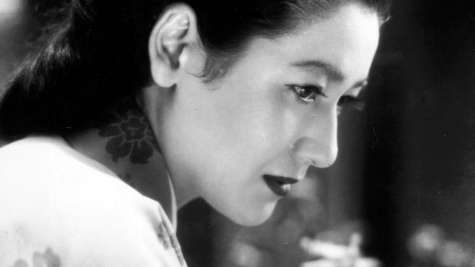 If I try to visualize Satoko, I see Setsuko Hara.
In general, Mishima’s manly worldview had little room for women. Whether the cause was his hyper-masculine ethos or his homosexual tendencies, women in his books are, for the most part, either peripheral characters (like Kyoko in her own house) or sadistic harpies (like Yuko in The Frolic of the Beasts). Though sometimes he made exceptions — the main character in After the Banquet is an earthy and vivacious woman in her fifties who owns a restaurant and briefly tries to support an inept right-wing politician, only to her disappointment. But no writer, in any country, in any century, ever created a character like Satoko. On the day of the banquet, as Kiyoaki’s solipsistic adoration of his imaginary version of Satoko gives way to “frustration when he discovered that her thoughts were obviously turned elsewhere,” (134) a piercing cry for help tears itself from her:
(Spring Snow, 135)
Kiyoaki’s reading of her feelings is unswervingly true to himself: “With unerring accuracy, she had marshaled just those words that were calculated to wound him most deeply, like arrows aimed at his weakest points. She had tipped them with a poison distilled from the misgivings that preyed on him most.” (135-136) Thus, it may only be upon returning to the novel after many years that one will realize just how utterly alone Satoko is. There is no one in the world who will help her, certainly not this conceited boy. Furthermore, Kiyoaki at least has his friend Honda to plead with the Abbess of Gesshu on his behalf. Satoko has no one to even talk to other than her servant Tadeshina, whose over-eagerness to “help” her has the same motivation as “those people who would tend their gardens scrupulously just for the pleasure of tearing up their flowers once they had bloomed.” (354)
When Satoko becomes pregnant, Tadeshina sits her down for a talk whose purpose is to convince her that, “You must get rid of the baby — as soon as possible.” (269) This is how she replies:
(Spring Snow, 270)
If it is true that Mishima believed in “a psychological drive toward death that is, he argues, distinctively male,” (Rankin, 79) then it is quite peculiar that the most sincere and self-aware expression of this sentiment to be found in all of Mishima’s work belongs to a woman. But perhaps it is not self-destruction that she seeks, but self-purification. The violation that she undergoes moves her into a realm totally beyond Kiyoaki’s comprehension. In Runaway Horses, Isao reads a right-wing pamphlet that extols the samurai spirit using the language, “They loved the moon shining on the banks of the Shirakawa with the love of men who believed that it was the last harvest moon they would see in this life. They prized the cherry blossoms like men for whom this spring’s blossoms were the last that would ever bloom.” (Runaway Horses, 70) But Isao himself lacks this fatalistic clarity, being as turbulent as Kiyoaki. The men were too busy playing: bodybuilding, posing with katanas, making speeches, writing manifestos, acting in yakuza films. The genuine article looks like this: “You know, when I saw those pines by the beach tonight, I knew that I’d never see them again no matter how long I lived. And when I heard the sound of the breeze that blew through them, I knew that I’d never hear that again as long as I lived. But every moment I was there felt so pure that now I have no regrets about anything at all.” (Spring Snow, 242)
It seems to me that a defining characteristic of conscious individual existence is the ability to decide. In other words, to call yourself human in the full sense of the word, you have to have made at least one decision in your life — a single free, conscious choice. It is harder than it sounds. Think back for a moment. How many times have you truly chosen something, in a situation where your choice carried serious consequences that you knowingly accepted? Once, maybe twice? That is already a lot. The opportunity to choose does not come by often. Most of the time, the direction of our entire lives is determined by pure chance or coincidence, influenced by momentary emotions or impressions, with no more substance to our deliberations than if we had simply cast lots. In Runaway Horses, Isao quotes “the philosophy of Wang Yang-ming…something that is called congruity of thought and action: ‘To know and not to act is not yet to know.’” (Runaway Horses, 390) But that principle can easily be inverted: to act and not to know is not yet to act.
So, then, who in Spring Snow can be said to have made a true choice? Certainly not Kiyoaki: even his final journey through the snow to the temple gate is driven by emotional instinct. “True beauty” manifests itself through him, but he himself does not see it. Likewise, when he begins his pursuit of Satoko, there is little more to it than reptilian desire and slyness. Satoko, who knows that he is lying, is the one who makes the choice, just as later she makes the choice to become a nun. And it is not the Abbess who refuses to allow Kiyoaki to see her: “You may feel that I am the one who is using every means to keep these two apart. However, surely it may well be that some superhuman agency is at work here. It began when Satoko herself made a vow before the Lord Buddha. She swore never to meet this man again in this world.” (Spring Snow, 383-384)
(Spring Snow, 383)
The setting of a Buddhist temple shows that Satoko’s experience has a religious dimension. But the specific religious experience in question is not repentance or conversion. The concept of sin is one that Mishima is not capable of understanding. There is a remarkable scene where Kiyoaki and Satoko walk together, naked, on the beach in Kamakura at night, in which pagan sensuality seems to merge with Biblical innocence (“And they were both naked, the man and his wife, and were not ashamed“). It is not the weight of sin that is revealed to Satoko. It is the desire to suffer and leave this world, because one has seen a better and purer one. To be the “Pure Land.”
There is a mystery at the heart of Spring Snow that can never be fully understood. A painful, but ultimately mundane family affair, material for a novel of manners, becomes the catalyst through which the fabric of physical existence is torn to shreds. The lifting of reality, the liberation from it. The feeling of a moment that never happened, and yet becomes a meaningful substitute for one’s entire life, which never happened either. The desire to throw oneself into the dirt and weep, because the material world is barren and corrupt, and life in it is meaningless. The uselessness of living past twenty. The loss of the divine spark. To read Spring Snow once, and then to die, is not such an inequitable proposition.
And as for Japanese culture, Spring Snow became its eternal symbol. It is neither the chrysanthemum nor the sword that embodies Japan, and not the gallant samurai, the Zen garden, the glorious suicide, or the Emperor, but a young boy in a Western-style uniform jacket, and a young girl in a light blue kimono.
(Continuation: part 2.)
 Fallen Leaves
I have thought it inevitable that you’d tackle Mishima one day, and I am glad to be here while you do so. Thank you for your insight, and I look forward to the next installment.
LikeLike
Glad to have you with us.
LikeLike
I just finished Spring Snow an hour ago. I didn’t want to let it go and was thrilled and moved to find your essay. I very much look forward to Part Two.
LikeLike
Glad to have you with us.
LikeLike