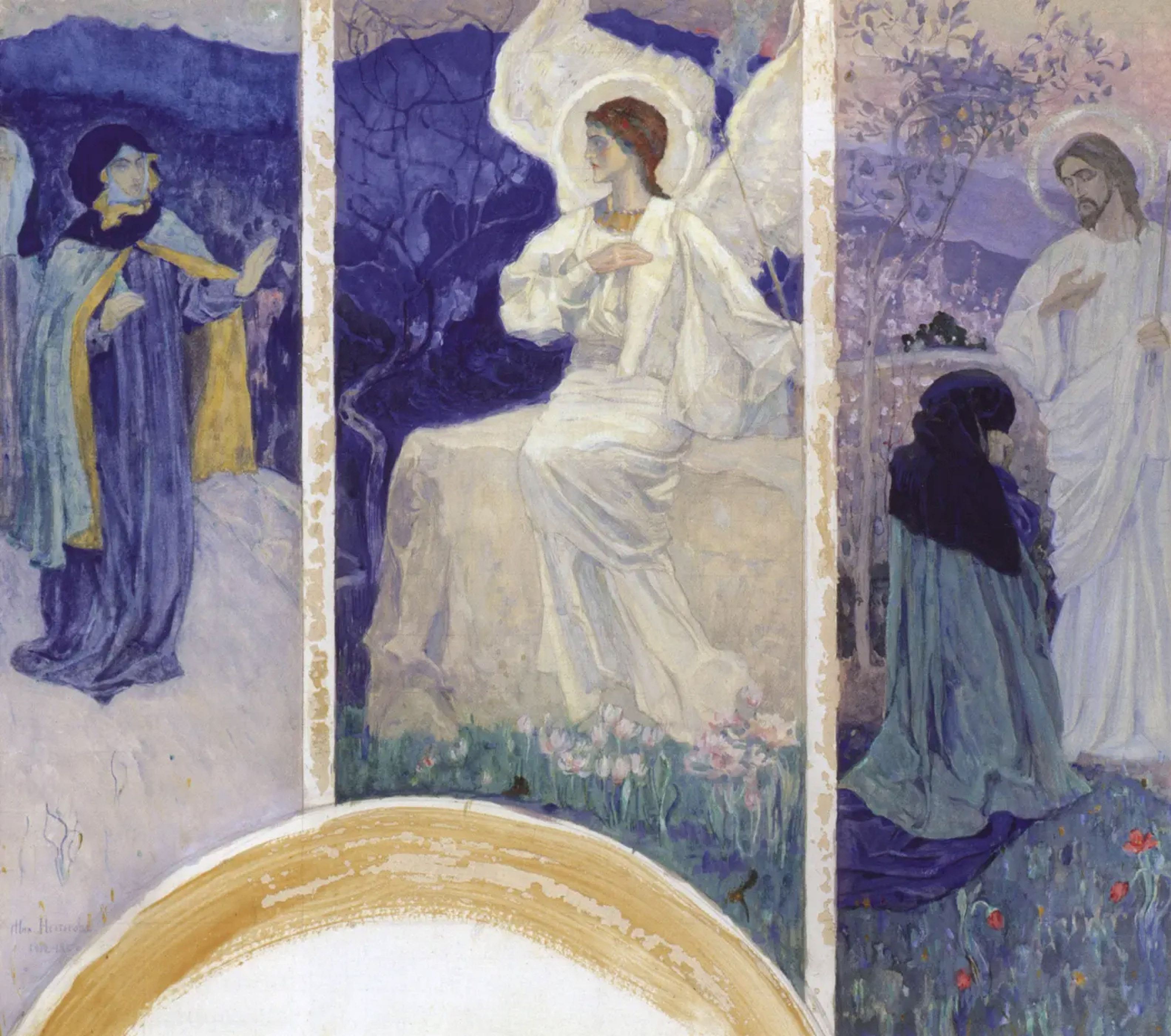
Fresco of the Resurrection. Mikhail Nesterov, 1909.
Fallen Leaves wishes its readers, whoever they may be, a happy Orthodox Easter. Continue reading
Fresco of the Resurrection. Mikhail Nesterov, 1909.
Fallen Leaves wishes its readers, whoever they may be, a happy Orthodox Easter. Continue reading

(Angel, 53)
(Conclusion. Continued from part 3.)
Mishima completed The Decay of the Angel on the morning of November 25, 1970. That same day, he “staged a violent incident at the SDF headquarters at Ichigaya in central Tokyo,” taking the commandant hostage, then attempted to exhort the soldiers “to join him in a revolt to overturn the constitution,” and finally “returned inside the building and, with the assistance of his students, committed suicide by seppuku.” (Rankin, 171) But we already discussed Mishima’s nationalism. What matters now is that nowhere in Angel is there the slightest hint of anything political, nor the most remote suggestion of this violent end. Continue reading
Icon of the Nativity, Studenica Monastery.
Fallen Leaves wishes its readers, whoever they may be, a merry Christmas according to the Julian calendar. Continue reading

(Continued from part 2.)
Of the four novels comprising The Sea of Fertility, the odd one out is The Temple of Dawn. For instance, it is the only one of the four to be spread out over a long period of time, with the first scene taking place in 1941 and the last in 1967. Every other novel, including The Decay of the Angel, concentrates on a narrow time span. The focus of The Temple of Dawn is thus strangely blurred. Continue reading
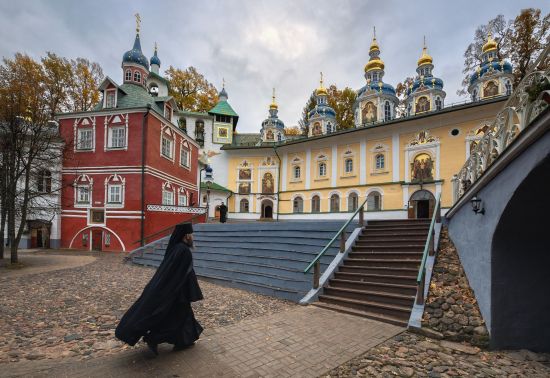
Pskov Caves Monastery.
Fallen Leaves wishes its readers, whoever they may be, a happy Orthodox Easter. Continue reading

Sergei Esenin, 1920
(Continued from part 1.)
Runaway Horses is Mishima’s “right-wing” novel, deliberately written in a way that parallels the author’s own death (which, most likely, he had already planned out at the time of writing). There is no way to avoid it, and it cannot but be read as autobiographical. Continue reading
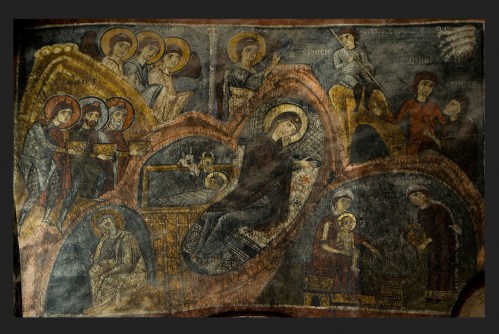
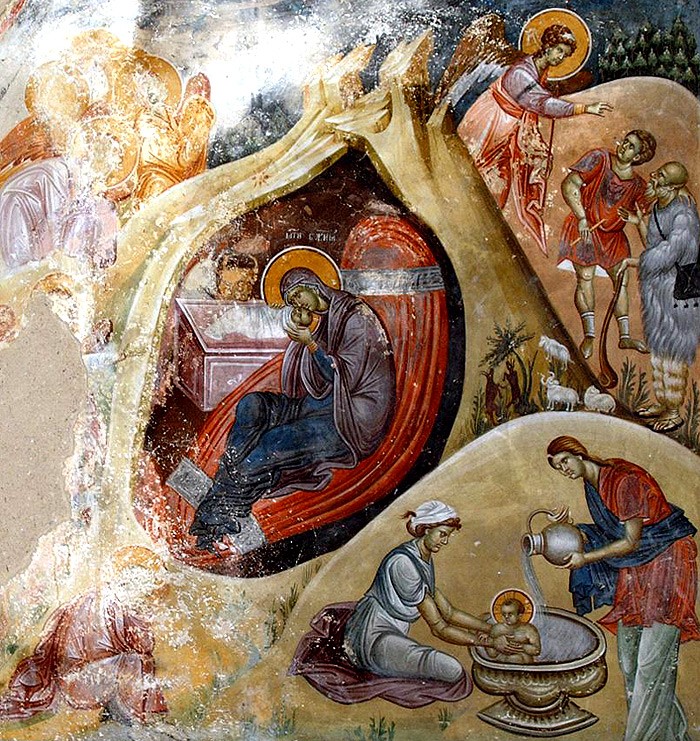
Fresco of the Nativity, from a 10th-century
Byzantine cave monastery.
Fallen Leaves wishes its readers, whoever they may be, a merry Christmas according to the Julian calendar. Continue reading

(Spring Snow, 255)
It is comforting to think that culture has a longer lifespan than man. But sometimes it is the other way around. A culture that dies suddenly still remains in the minds of its last carriers for as long as they live, sometimes decades. By inertia, it still seems to exist. But they do not pass it on, and once they die, it vanishes abruptly — from the material world, of course. Continue reading
Icon of the Trinity.
Fallen Leaves wishes its readers, whoever they may be, a happy Orthodox Easter. Continue reading
Chapter and line numbers from the Gabler edition.
The literary idea of Ulysses is represented in microcosm by its fourteenth chapter, unofficially titled “Oxen of the Sun.” Whatever you think of this chapter — whether you find it impressive, pretentious, exhilarating, intimidating, boring, liberating, or unreadable — is likely to be your opinion of the novel as a whole. For that reason, we may also start there. Continue reading